If the idea of using artificial intelligence sounds intimidating — or worse, like something you are being left out of — you are not alone. You hear about it on the news. Your children use it. Colleagues mention it in meetings and everyone nods like it is obvious. And somewhere inside, a quiet fear grows: everyone else seems to be getting it, and I do not.
Here is the secret nobody says out loud: most explanations of AI are written by people who already understand technology. They use words like "large language model" and "fine-tuning" and lose you in the third sentence. That is not a failure on your part. It is a failure of explanation.

What AI actually is
Strip away the jargon and AI is a very smart tool. Like a calculator that can also talk. You ask it a question, and it answers. You ask it to write something, and it gives you a first draft. You ask it to explain something complicated, and it breaks it down in plain language.
If you can type a sentence, you can use AI. You do not need to understand how it works — you just need to know how to ask. And you do not need to learn it all at once: five minutes a day is enough to build real confidence.
The cost of waiting
AI is becoming ordinary — the way email and the internet did. Every month it quietly handles more of the work nobody wants to do: the email that needs writing, the letter that needs sending, the decision that needs a second opinion, the health question that needs a clear answer. None of that requires a career in technology. It requires the willingness to ask.
The people getting value from AI today are not the ones who understand it. They are the ones who started asking questions. Early. The tool rewards the beginner who is curious more than the expert who is waiting for permission.
Where you start — today
You do not need a course or a 10-step setup. Open any free AI tool and have your first conversation:
Explain [a topic you deal with regularly] in the simplest possible terms, as if I were a beginner. Use short sentences and no jargon.
Then do that once a day, about anything that is actually on your mind:
- Day 1–2 — ask about things you already understand, so you can judge the quality of the answers.
- Day 3–4 — ask it to explain something that confuses you — a medical letter, a bill, a news topic.
- Day 5–7 — ask it to write something small: a reply email, a note to a neighbor, a birthday message.
A week of that, and AI stops being a threat and becomes a tool in your pocket. That is the entire beginning.
The safety rules never change
AI is a tool, and like any tool it needs care. Four rules cover almost everything:
- Never share passwords, bank details, or personal identification numbers with an AI.
- Ask AI to give you the source when it makes a factual claim — and double-check anything important.
- Treat anything that "urgently needs action" with suspicion. AI can help you spot a scam before you fall for it.
- Remember: AI does not know your situation unless you tell it. The better your context, the better the answer.
“But I’m not a tech person.”
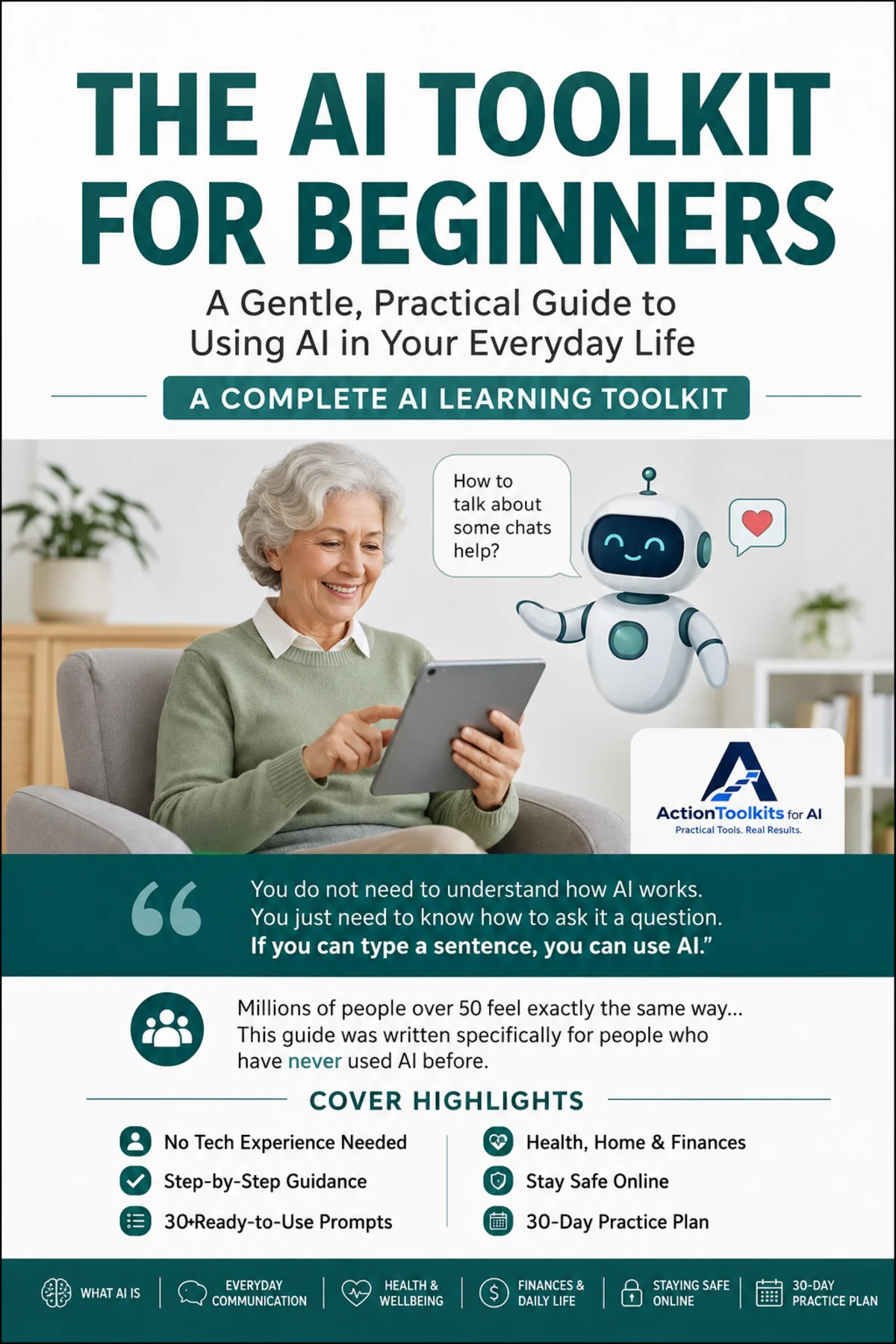
That is exactly who the right guide is written for. You do not need to understand circuits to drive a car, and you do not need to understand code to use AI. What you need is thirty ready-to-use prompts in plain English, step-by-step guidance, and a plan that respects your pace — five minutes a day, health, home, and finances included.
You do not need to understand how AI works. You just need to know how to ask it a question.
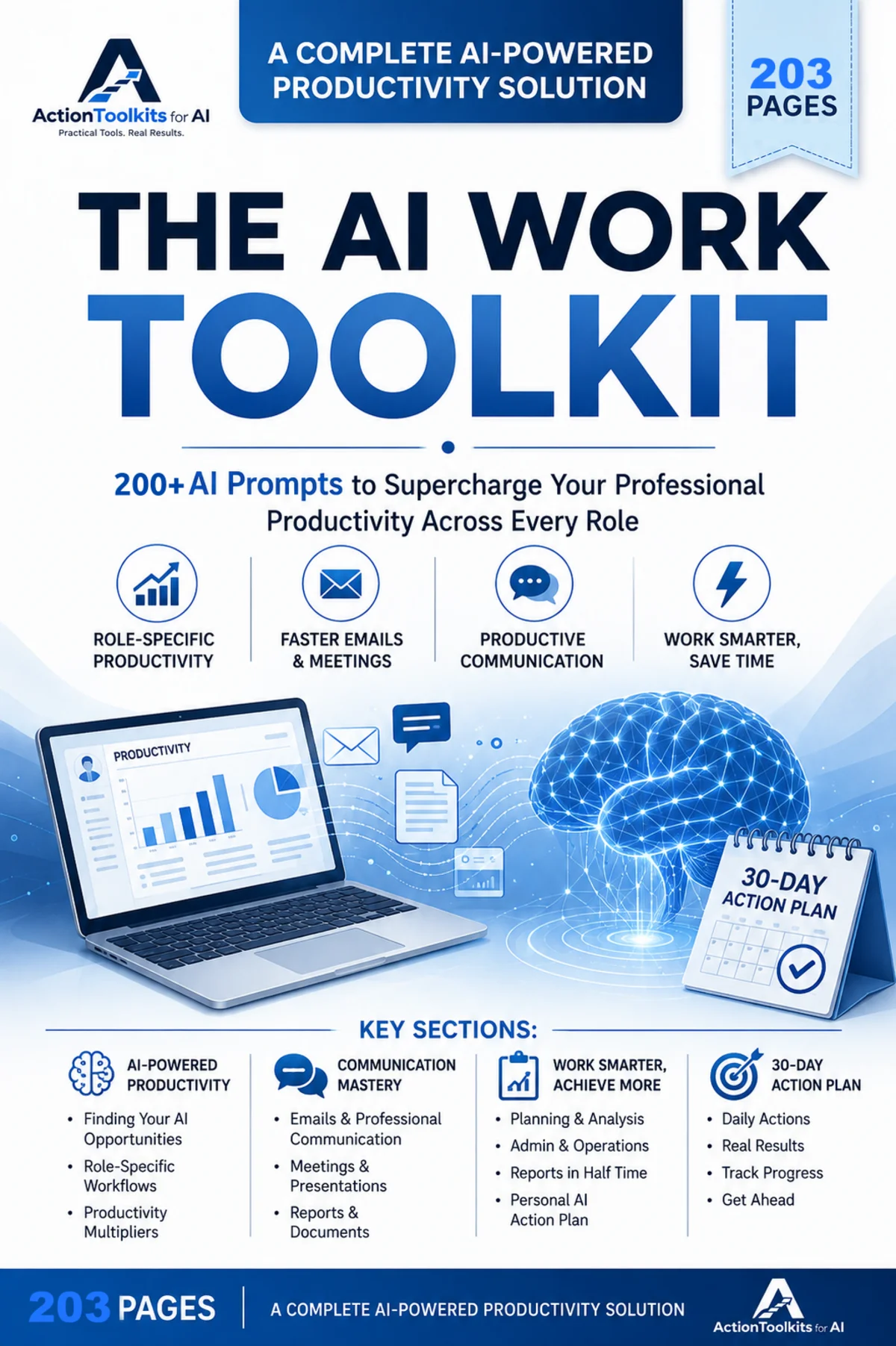
If you want the guided month — 46 pages, 30 ready-to-use prompts in plain English, the safety rules, and the step-by-step 30-day practice plan with nothing left to figure out — it is all in the toolkit below.