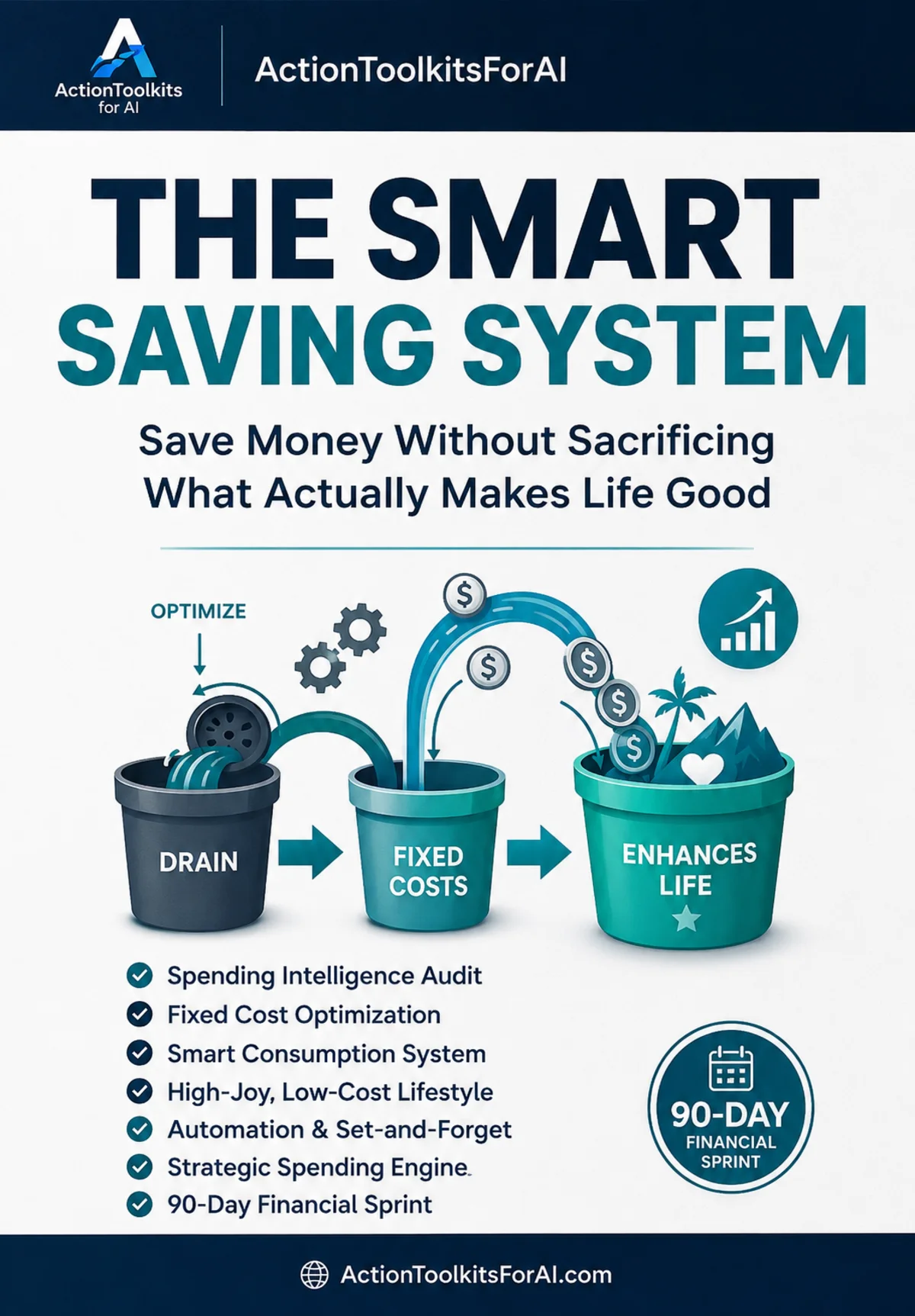
You have heard the advice a hundred times: skip the morning coffee, cancel the subscription, cook at home, live like a monk. Maybe you even tried it — for three weeks. Then the resentment built, you "deserved" a treat, and you rebounded harder than before. You do not have a discipline problem. You have a system problem.
Here is the premise most saving advice gets backwards: the goal is not to spend less money. The goal is to spend less on things that do not actually make your life better, so you can spend more on the things that do. Every dollar redirected from something that barely matters to something that genuinely improves your life is a double win — you save and you live better.

Why "cut your coffee" always fails
Deprivation is not sustainable, and the math proves it. Giving up small pleasures feels like sacrifice without reward, so your brain rebels and the plan collapses — usually with a "treat yourself" purchase that erases the two weeks of coffee-saving.
The real waste is not the coffee. It is the money quietly leaking out of things you barely notice and would never miss: the subscriptions you forgot, the fixed costs you never renegotiated, the convenience spending that adds no joy. Cut those — and keep the coffee.
The waste is hiding in plain sight
Most people can redirect a surprising amount of money every month without feeling a thing, because the spending was never meaningful to begin with:
- Fixed costs — the insurance, phone, internet, and banking fees that have not been touched in years.
- Subscriptions — the services you signed up for once and have not opened in months.
- Convenience leaks — the small automatic purchases that add up to a real number by month’s end.
- Comparison spending — the purchases made to keep up, not because they were wanted.
None of that requires willpower to cut. It requires visibility — you cannot redirect money you never see. The audit is not about guilt. It is about seeing, for the first time, where the leaks actually are.

Why AI makes the audit finally practical
Tracking every expense feels like a part-time job, which is why nobody does it. AI turns the chore into minutes: you describe your spending, it sorts it, flags the waste, and helps you see patterns you have never noticed. The tool does the grinding; you make the calls.
Where you start this week
You do not need a budget overhaul to begin. You need the audit:
- Pull your last three months of spending and list it — every category, every fixed cost.
- Flag the waste — subscriptions unused, fixed costs not renegotiated, spending that adds nothing.
- Pick the three biggest leaks and set a date to fix each one this month.
- Redirect one redirected amount to something that genuinely improves your life — that is the double win.
One month of that and the saving is not a sacrifice. It is a side effect of spending well.
The honest caveat
This is not a get-rich system and it does not pretend to fix real financial distress. It is built for people who are doing fine but know there is waste — and want the lifestyle that costs less without feeling cheaper. For that, the system works: save without willpower, by removing what you never valued.
The richest people are not the ones who earn the most. They are the ones who spend only on what matters and let the rest flow elsewhere.
The full system — 51 pages, the spending audit templates, savings goal calculator, budget frameworks that actually stick, AI-powered expense review, the weekly money check-in, and the 90-day savings challenge — is in the toolkit below.